
Scientists Ask Public to Help Identify Distant, Light-Bending Galaxies :
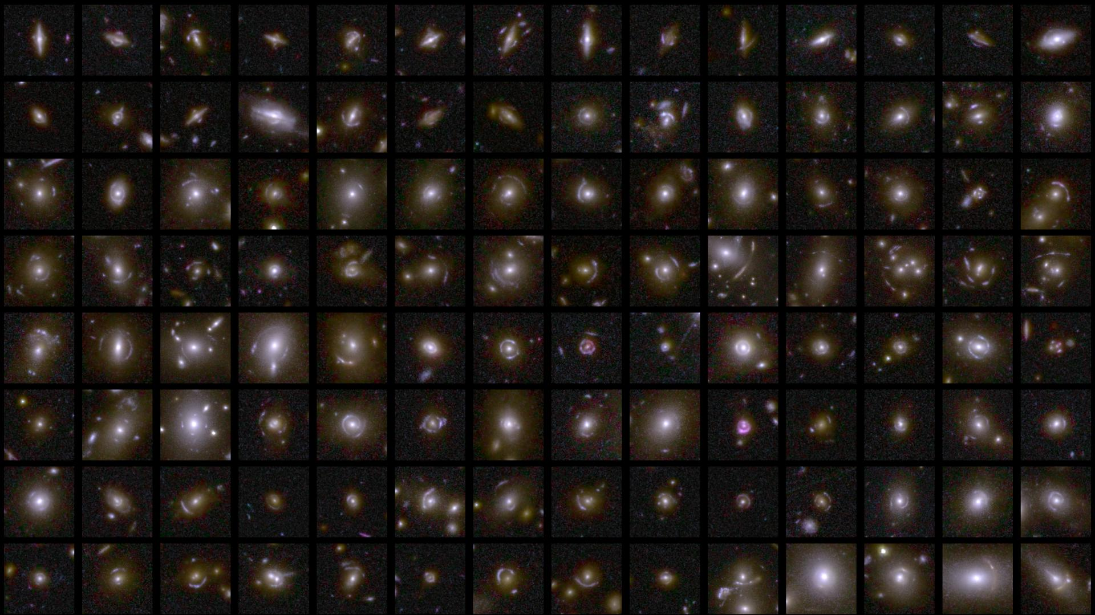
A global citizen-science project is inviting the public to scour Euclid’s massive DR1 ...
hothardware.com/news/esa-backed-project-asks-public-to-help-identify-light-bending-galaxies

Story Details
| Last Updated | |
| Total Articles | 1 |
Main Topics


person who systematically observes and analyzes phenomena and tests hypotheses using scientific methods

distribution of matter between a distant light source and a observer
Similar to This
Previous

manchester.ac.uk Oct 15
UK astronomers help reveal host galaxy of most distant fast radio burst: UK astronomers helped trace the most distant fast radio burst ever found to a small ...
manchester.ac.uk/about/news/uk-astronomers-help-reveal-host-galaxy-of-most-distant-fast-radio-burst/

Webb Traces 10-Billion-Year-Old Deep Space Signal To Its Source: Astronomers using the James Webb Space Telescope (with initial data captured by South Africa's ...
hothardware.com/news/webb-traces-10-billion-year-old-deep-space-signal-to-its-source

Space Jun 29
The James Webb Space Telescope peered into one of the universe's oldest galaxy clusters, and scientists can't explain what they saw
space.com/astronomy/galaxies/the-james-webb-space-telescope-peered-into-one-of-the-universes-oldest-galaxy-clusters-and-scientists-cant-explain-what-they-saw


European Space Agency's Euclid Captures The Star-Filled Center Of The Milky Way: NASA will begin mapping the galactic bulge with a mission later this summer.
engadget.com/2201136/european-space-agency-euclid-captures-the-star-filled-center-of-the-milky-way/

New JWST images of abnormally well-developed galaxy cluster open up the 'cosmic noon' frontier
phys.org/news/2026-06-jwst-images-abnormally-galaxy-cluster.html

Space Jun 09
James Webb Space Telescope weighs 'sleeping giant' black hole from 10 billion light-years away — and it's 6 billion times our sun's mass
space.com/astronomy/james-webb-space-telescope/james-webb-space-telescope-weighs-sleeping-giant-black-hole-from-10-billion-light-years-away-and-its-6-billion-times-our-suns-mass
Q&A: Is it time to expand our thinking about dark matter? A new study says yes: We may be more in the dark about dark matter than previously thought ...
phys.org/news/2026-05-qa-dark.html


Gravitational lens shows a galaxy just 800 million years post-Big Bang: Early galaxy has elements produced by the Universe's first supernovae.
arstechnica.com/science/2026/05/gravitational-lens-shows-a-galaxy-just-800-million-years-post-big-bang/
Space May 01
Help scientists find spacetime warps in these Euclid Space Telescope images: A new citizen science project invites the public to scan never-before-seen images ...
space.com/astronomy/galaxies/help-scientists-find-spacetime-warps-in-these-euclid-space-telescope-images
Space Apr 15
Scientists use rare 'Einstein Cross' to learn about young galaxy with surprisingly old stars
space.com/astronomy/galaxies/scientists-use-rare-einstein-cross-to-learn-about-young-galaxy-with-surprisingly-old-stars

Space Apr 04
Record-breaking 'space laser' erupts from merging galaxies 8 billion light-years away
space.com/astronomy/galaxies/record-breaking-space-laser-erupts-from-merging-galaxies-8-billion-light-years-away


Day 5 of the 2025 Space Telescope Advent Calendar: Colorful Stars of All Ages: Day 5 of the 2025 Space Telescope Advent Calendar
theatlantic.com/photography/2025/12/day-5-2025-space-telescope-advent-calendar-colorful-stars-all-ages/685154/


Astronomers Detect Mysterious Dark Object in Distant Galaxy: Astronomers have detected a mysterious dark object in the distant universe — and its size has them ...
futurism.com/space/mysterious-dark-object-universe

Scientists hail ‘avalanche of discoveries’ from Euclid space telescope: Data from European Space Agency’s mission has allowed researchers to create detailed ...
theguardian.com/science/2025/mar/19/scientists-hail-avalanche-discoveries-euclid-space-telescope

Space telescope finds rare 'Einstein Ring' of light in nearby galaxy: An Einstein Ring was discovered by the European Space Agency's Euclid space telescope in ...
npr.org/2025/02/11/nx-s1-5292505/einstein-ring-euclid

Key FactsEuclid Space Telescope Spots Rare Einstein Ring
Feb 11, 2025 · Reading time: ~45 sec.
Summary created with AI assistance · Source: npr.org
Summary created with AI assistance · Source: npr.org
- The ESA’s Euclid telescope identified an Einstein Ring encircling the galaxy NGC 6505, located nearly 590 million light-years from Earth.
- This ring results from the alignment of NGC 6505 with another unnamed galaxy 4.42 billion light-years distant.
- Einstein Rings are a form of strong gravitational lensing caused by light bending around massive celestial objects.
- The finding will aid in studying dark matter and provide insights into distant galaxies from the early universe.
We'll be able to study distant old galaxies from early in the universe's history in far better detail and in far greater numbers than we have been able to up to this point.— Jacqueline McCleary, assistant professor of physics at Northeastern University, on the future research possibilities with the Euclid telescope.

Einstein effect confirmed: Euclid telescope makes sensational discovery: Surprisingly early in its mission, which was launched in 2023, the Euclid space probe ...
t3n.de/news/einstein-effekt-teleskop-euclid-1672354/


Euclid Telescope Spots Einstein Ring Wrapped Around a Galaxy: The structure is nearly 600 million light-years from Earth and is an early display of the nascent ...
gizmodo.com/euclid-telescope-spots-einstein-ring-wrapped-around-a-galaxy-2000561575

Next