
Euclid space telescope discovers perfect "Einstein ring": Why the discovery astonishes astronomers
t3n.de/news/

Story Details
| Last Updated | |
| Total Articles | 4 |
Main Topics

ESA space telescope aimed at mapping the distribution of dark matter


News on this topic
Einstein effect confirmed: Euclid telescope makes sensational discovery: Surprisingly early in its mission, which was launched in 2023, the Euclid space probe ...
t3n.de/news/einstein-effekt-teleskop-euclid-1672354/
Similar to This
Previous

Space Jul 10
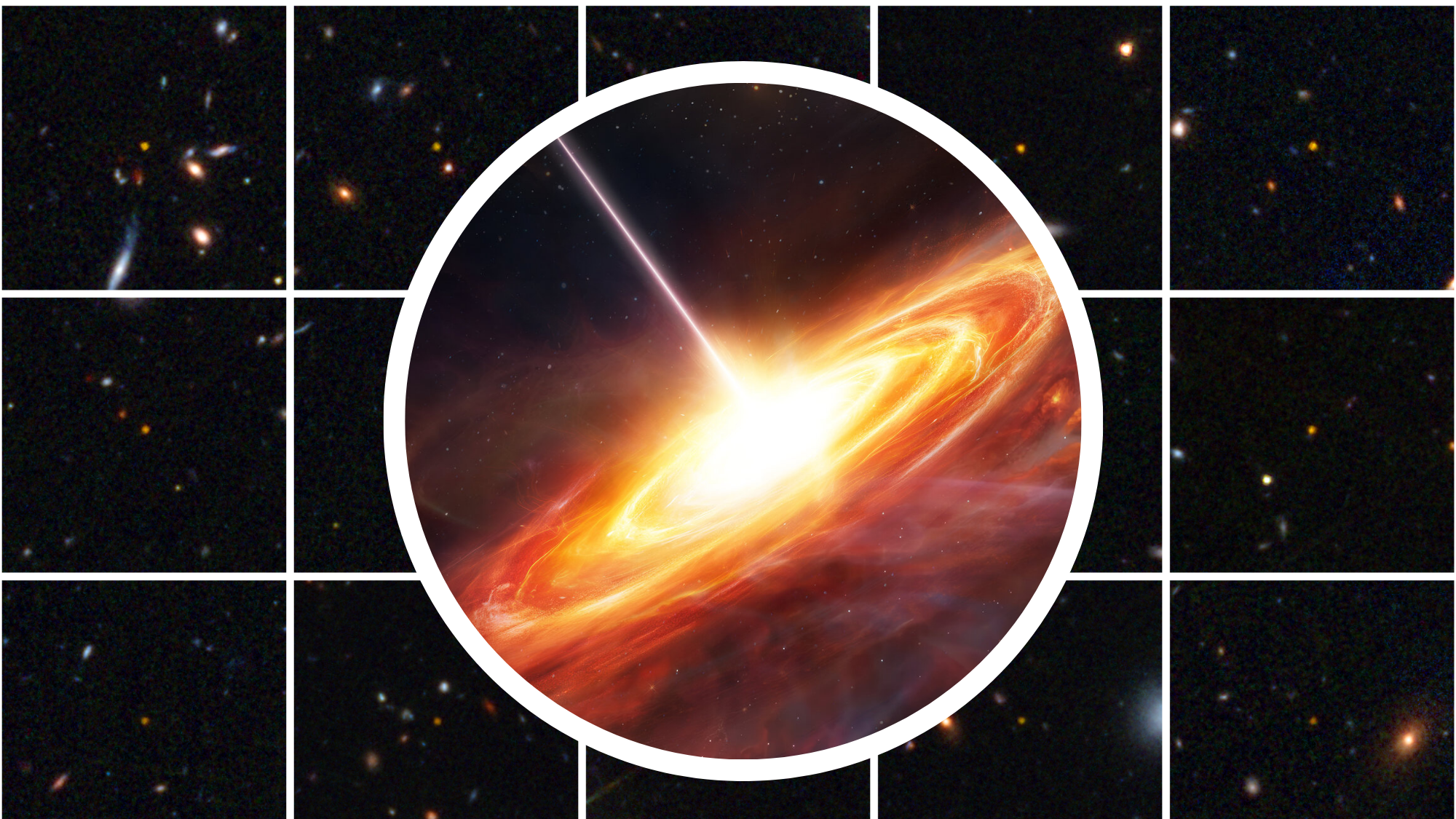
Scientists have discovered the oldest quasar ever seen, and it shines with the light of a trillion suns
space.com/astronomy/black-holes/scientists-have-discovered-the-oldest-quasar-ever-seen-and-it-shines-with-the-light-of-a-trillion-suns

livescience Jul 07
Euclid telescope discovers the 2 most ancient monster black holes in the universe — each brighter than a trillion suns
livescience.com/space/black-holes/euclid-telescope-discovers-the-2-most-ancient-monster-black-holes-in-the-universe-each-brighter-than-a-trillion-suns


NASA’s Hubble telescope detects possible ‘dark galaxy’: A galaxy made almost entirely of dark matter, an elusive form of matter that doesn’t interact with light ...
edition.cnn.com/2026/03/03/science/nasa-hubble-galaxy-dark-matter


Largest-ever cosmological simulation created using algorithms for Euclid mission: The consortium running the European Space Agency's (ESA) Euclid mission ...
phys.org/news/2025-09-largest-cosmological-simulation-algorithms-euclid.html


With images of 26 million galaxies, ESA’s Euclid telescope allows ‘deeper’ look into dark universe, galaxy structures
indianexpress.com/article/technology/science/esa-euclid-telescope-26-million-galaxies-9907080/

Astronomers discover 2,674 dwarf galaxies using Euclid telescope: ESA's Euclid space telescope has been providing valuable data from the depths of space for ...
phys.org/news/2025-03-astronomers-dwarf-galaxies-euclid-telescope.html


Euclid Space Telescope: 26 Million Galaxies in One Swoop: The European Euclid Space Telescope has delivered data again. The ESA has published a 3D map of 26 ...
faz.net/aktuell/wissen/weltraum/weltraumteleskop-euclid-26-millionen-galaxien-auf-einen-schlag-110368304.html

Euclid Space Telescope: ESA publishes first data - | what it could tell us about the universe
t3n.de/news/

Space telescope reveals rare ‘Einstein ring’ phenomenon with startling clarity: The Einstein ring, formed as light from a distant galaxy bends to glow around ...
edition.cnn.com/2025/02/11/science/einstein-ring-euclid-telescope/index.html


Astronomers Stunned As Euclid Telescope Captures A Space-Warping Einstein Ring: A space telescope has made a significant discovery, uncovering its first Einstein ...
hothardware.com/news/euclid-telescope-captures-einstein-ring

Space telescope reveals rare ‘Einstein ring’ phenomenon with startling clarity: The Einstein ring, formed as light from a distant galaxy bends to glow around ...
edition.cnn.com/2025/02/11/science/einstein-ring-euclid-telescope/index.html

In the "cosmic backyard": Euclid space telescope discovers perfect Einstein ring: Shortly after its launch, a European space probe has already delivered ...
spiegel.de/wissenschaft/weltall/esa-weltraumteleskop-euclid-entdeckt-perfekten-einsteinring-a-1d649dbe-427d-4e2b-99b8-08e8e3477a7d


Ziff Davis Feb 12 25
Euclid Telescope Spots Rare 'Einstein Ring' In Nearby Galaxy
extremetech.com/science/euclid-telescope-spots-rare-einstein-ring-in-nearby-galaxy


Space telescope finds rare 'Einstein Ring' of light in nearby galaxy: An Einstein Ring was discovered by the European Space Agency's Euclid space telescope in ...
npr.org/2025/02/11/nx-s1-5292505/einstein-ring-euclid

Key FactsEuclid Space Telescope Spots Rare Einstein Ring
Feb 11, 2025 · Reading time: ~45 sec.
Summary created with AI assistance · Source: npr.org
Summary created with AI assistance · Source: npr.org
- The ESA’s Euclid telescope identified an Einstein Ring encircling the galaxy NGC 6505, located nearly 590 million light-years from Earth.
- This ring results from the alignment of NGC 6505 with another unnamed galaxy 4.42 billion light-years distant.
- Einstein Rings are a form of strong gravitational lensing caused by light bending around massive celestial objects.
- The finding will aid in studying dark matter and provide insights into distant galaxies from the early universe.
We'll be able to study distant old galaxies from early in the universe's history in far better detail and in far greater numbers than we have been able to up to this point.— Jacqueline McCleary, assistant professor of physics at Northeastern University, on the future research possibilities with the Euclid telescope.

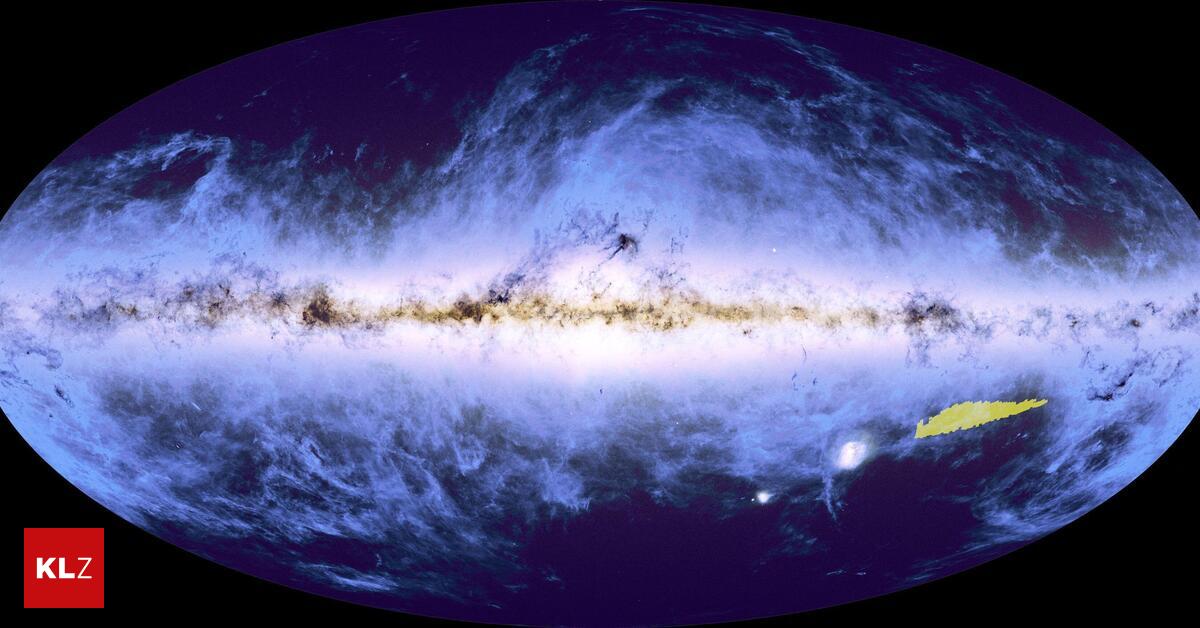
Extremely rare phenomenon: Euclid space telescope discovers Einstein ring: Researchers found a so-called Einstein ring in a nearby galaxy, an extremely rare ...
kleinezeitung.at/international/19346827/weltraumteleskop-euclid-entdeckt-einstein-ring

Euclid Telescope Spots Einstein Ring Wrapped Around a Galaxy: The structure is nearly 600 million light-years from Earth and is an early display of the nascent ...
gizmodo.com/euclid-telescope-spots-einstein-ring-wrapped-around-a-galaxy-2000561575


Euclid space telescope: An impressive Einstein ring in the galaxy NGC 6505: The Euclid space telescope discovered an Einstein ring
spektrum.de/alias/bilder-der-woche/ein-eindrucksvoller-einsteinring-in-der-galaxie-ngc-6505/2252383

The Great Cosmic Atlas Begins: Euclid’s 208-Gigapixel Image Maps 14 Million Galaxies
gizmodo.com/the-great-cosmic-atlas-begins-euclids-208-gigapixel-image-maps-14-million-galaxies-2000512179


Euclid: 'Dark explorer' opens its eyes on the cosmos: Europe's new space telescope, Euclid, returns test images ahead of its 3D survey of the Universe.
bbc.com/news/science-environment-66365074

Key FactsEurope activates new $1.5 billion space telescope
Aug 1, 2023 · Reading time: ~30 sec.
Summary created with AI assistance · Source: arstechnica.com
Summary created with AI assistance · Source: arstechnica.com
- First images and data of the Universe were captured by a European telescope.
- Alessandra Roy, Euclid project manager at the German Space Agency at DLR, expresses satisfaction with the successful commissioning phase.
- The telescope has a primary mirror with a diameter of 1.2 meters, about half the size of the Hubble Space Telescope.
- Euclid will observe billions of galaxies in the night sky and provide data for a three-dimensional map of the Universe.
Next