

Osiris-Rex: Asteroid sample recovered and arrived in the first clean room:
The largest rock sample directly from an asteroid has been safely recovered and is on ...
heise.de/news/Osiris-Rex-Asteroidenprobe-geborgen-und-im-ersten-Reinraum-angekommen-9315198.html


News on this topic


 Paid articlePaywall
Nasa mission "Osiris-Rex": "Holding samples of asteroids in your hand - that's crazy"
spiegel.de/wissenschaft/weltall/nasa-mission-osiris-rex-proben-von-asteroiden-in-der-hand-zu-halten-das-ist-irre-a-a920b222-ea5c-445d-bdf4-be9ecf45376c
Similar to This
Previous

github.com Nov 17
GitHub - muxammadali-Bakhtiyorov/Tomato-with-TARS: This is ROOKIE devs. The project we're presenting for NASA Hackathon is "Tomatoes with TARS" ...
github.com/muxammadali-Bakhtiyorov/Tomato-with-TARS

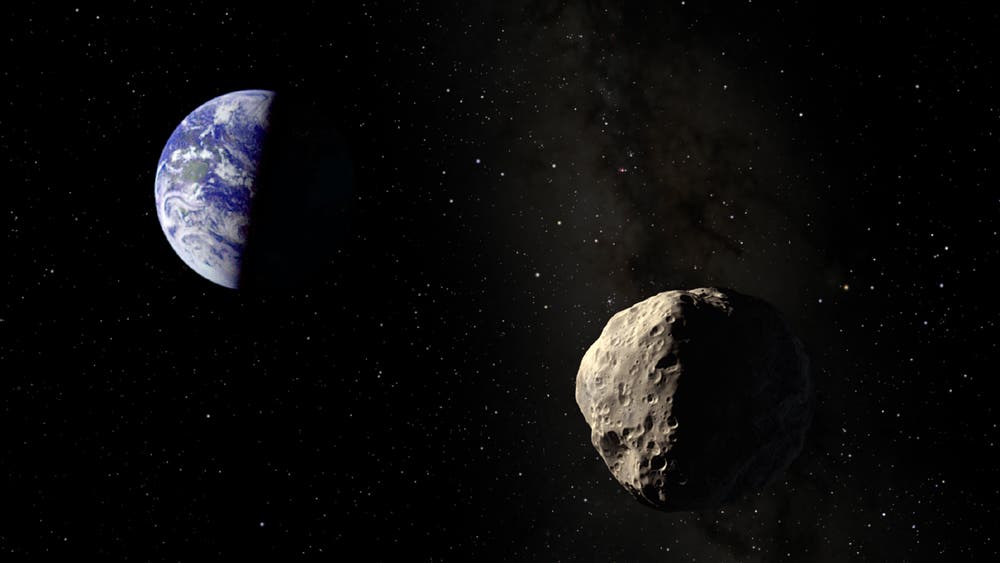
Off to the asteroid Apophis!: The European Space Agency (ESA) announced that preparatory work for the RAMSES mission can begin. The probe is supposed to fly to ...
spektrum.de/news/ein-rendezvous-mit-apophis-im-jahr-2029/2211500

"The greatest miracle" occurs: Voyager 1 sends correct data again for the first time
heise.de/news/Jubel-bei-der-NASA-Voyager-1-sendet-erstmals-nach-Monaten-wieder-korrekte-Daten-9694359.html
Key FactsVoyager 1 Sends Usable Data to Earth Again
Apr 23, 2024 · Reading time: ~30 sec.
Summary created with AI assistance · Source: spektrum.de
Summary created with AI assistance · Source: spektrum.de
- Launched in 1977, Voyager 1's mission is to explore interstellar space.
- After sending unreadable data for months, a fix was found for the issue.
- Experts repaired a faulty chip in the Flight Data Subsystem to resume sending readable data.
- The mission remains iconic, but the battery's longevity is uncertain as the probe continues its journey through the Milky Way.
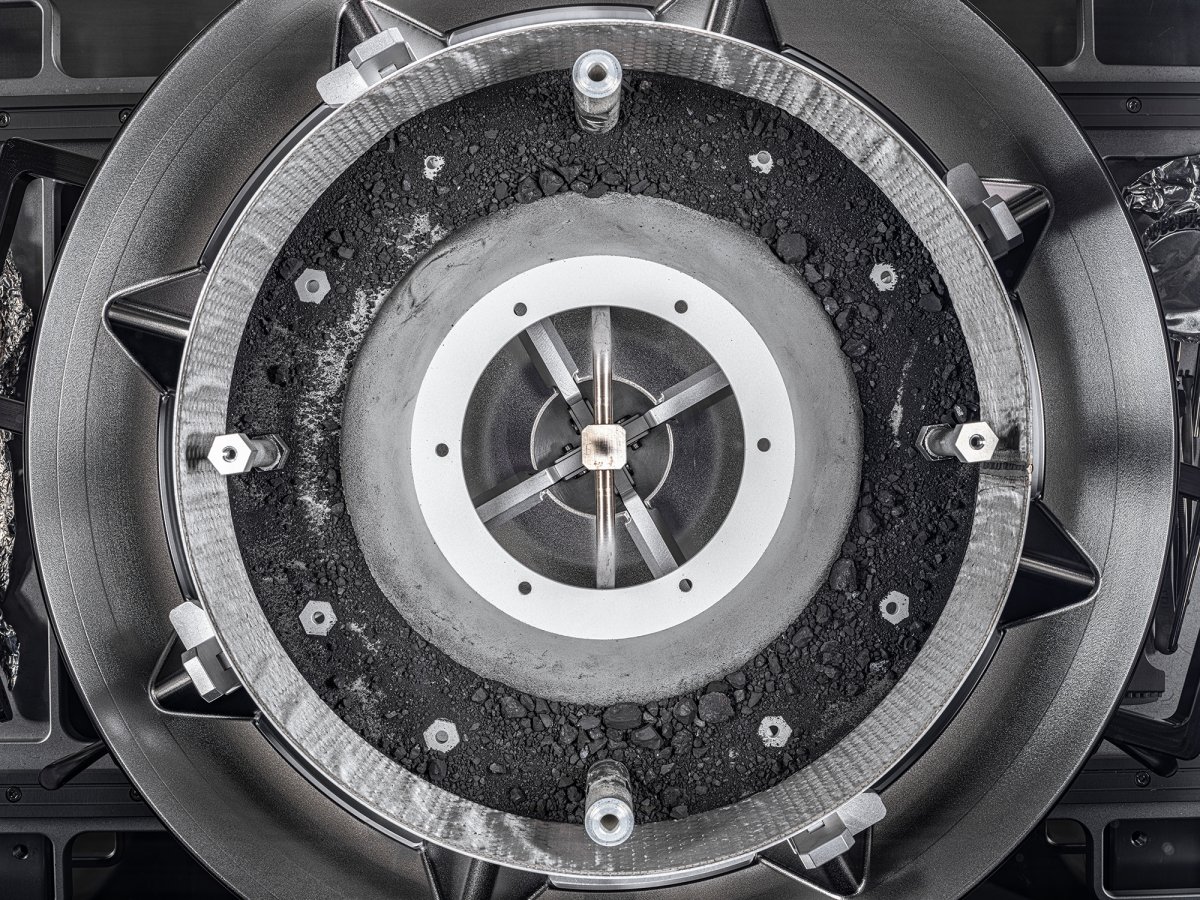
Finally accessible: Huge photo shows remaining asteroid sample from Osiris-Rex: NASA has finally managed to open the container containing the Osiris-Rex asteroid ...
heise.de/news/Endlich-zugaenglich-Riesiges-Foto-zeigt-restliche-Asteroidenprobe-von-Osiris-Rex-9604635.html


Failed private mission: US lunar lander probably burns up in the Earth's atmosphere
n-tv.de/wissen/US-Mondlander-verglueht-wohl-in-der-Erdatmosphaere-article24660780.html

Tech Times Jan 16 24

Space Debris Vaporizer, Planned by Japanese Startup to Clean Earth's Orbit: On-ground laser systems could soon be the answer to vaporizing space debris ...
techtimes.com/articles/300644/20240115/space-debris-vaporizer-planned-japanese-startup-clean-earth-orbit.htm


Osiris-Rex: Asteroid sample causes headaches: The rock samples from the asteroid Bennu that the Osiris-Rex space probe brought to Earth bring NASA
t3n.de/news/osiris-rex-asteroiden-probe-sorgt-fuer-kopfzerbrechen-1596700/
Osiris-Rex: Asteroid sample causes headaches: The rock samples from the asteroid Bennu that the Osiris-Rex space probe brought to Earth bring NASA
t3n.de/news/osiris-rex-asteroiden-probe-sorgt-fuer-kopfzerbrechen-1596700/


Scientists at London Museum to study dust from Bennu asteroid and unveil secrets: Scientists at London Museum to study dust from Bennu asteroid and unveil ...
wionews.com/science/scientists-at-london-museum-to-study-dust-from-bennu-asteroid-and-unveil-secrets-663827

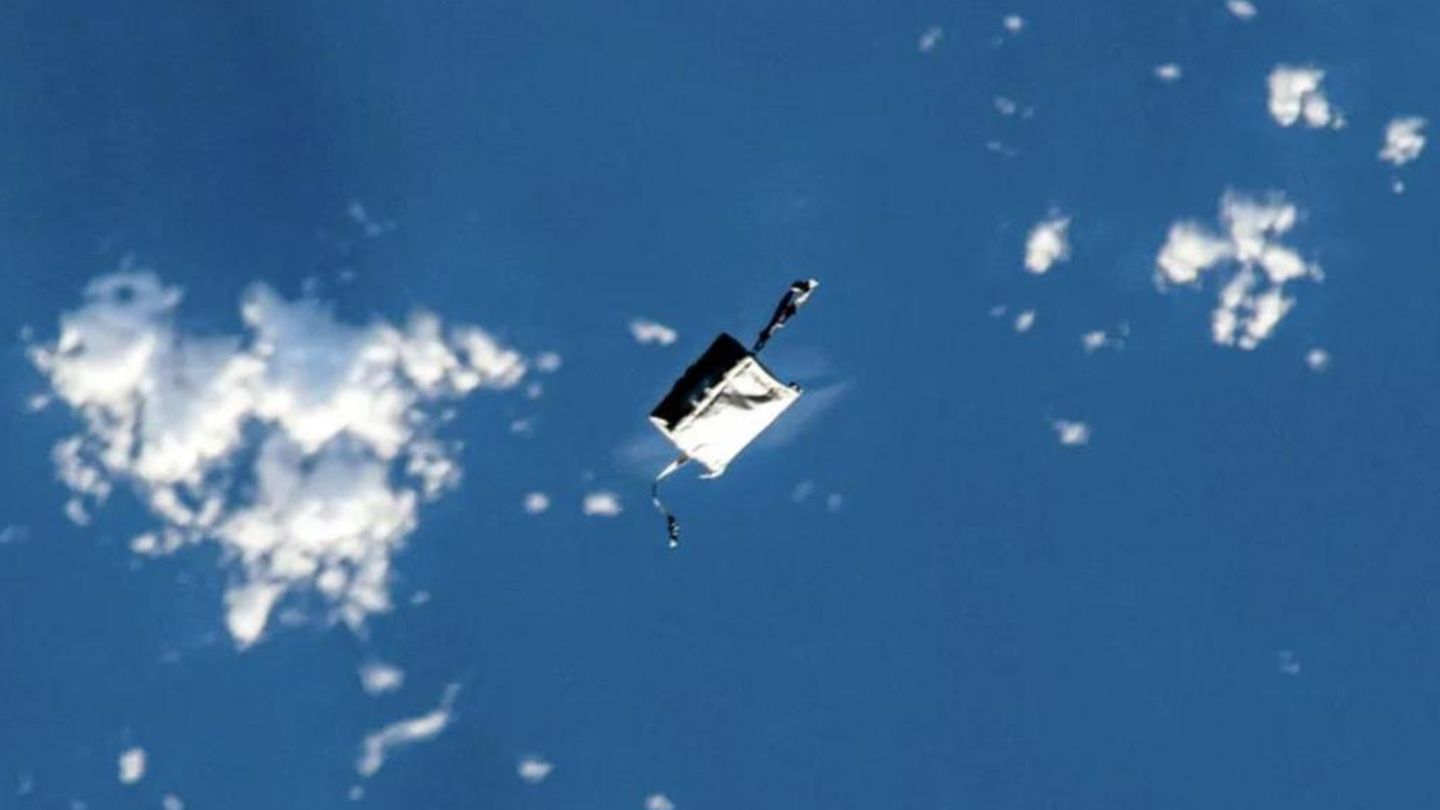
ISS astronauts lose tool bag in space here's how you can see them in the night sky
stern.de/panorama/iss-astronautinnen-verlieren-werkzeugtasche---so-koennen-sie-sie-sehen-34201030.html
Key FactsLost Space Tool Bag Tracked Down by Trash Monitors
Nov 14, 2023 · Reading time: ~30 sec.
Summary created with AI assistance · Source: theregister.com
Summary created with AI assistance · Source: theregister.com
- During a spacewalk on November 1, the NASA astronauts and ISS residents Jasmin Moghbeli and Loral O'Hara lost the bag.
- Mission Control determined after analyzing the trajectory that the risk of re-contacting the station is low and the crew and space station are safe.
- Astrophysicist Jonathan McDowell confirmed the bag is being tracked as a new orbital object.
- To spot the bag, sat-spotters should look a few minutes ahead of the ISS’s expected path.

Osiris-Rex: Small part of the asteroid sample already on display in the museum: It wasn't until the end of September that Osiris-Rex brought the sample it ...
heise.de/news/Osiris-Rex-Kleiner-Teil-der-Asteroidenprobe-bereits-im-Museum-ausgestellt-9354132.html


Scientists identify molten layer deep within interior of Mars: Seismic waves generated by a meteorite impact on the other side of Mars from where NASA's InSight ...
reuters.com/technology/space/scientists-identify-molten-layer-deep-within-interior-mars-2023-10-25/


Scientists reveal plan to use lasers to build roads on the moon: We could shoot lasers at the lunar soil to help us live on the Moon, scientists have proposed.
independent.co.uk/tech/moon-laser-road-soil-life-b2428684.html

Clues to the origin of the solar system? Samples from the asteroid Bennu should help
t3n.de/news/asteroid-bennu-nasa-sonde-osiris-rex-sonnensystem-1579734/


NASA asteroid sample lands safely in Utah before being whisked away by helicopter
npr.org/2023/09/24/1201386042/watch-live-nasa-sends-an-asteroid-sample-back-to-earth
Nasa prepares spectacular asteroid transport: It has been seven years since the Osiris-Rex spacecraft began its journey into space. Now she returns with we
t3n.de/news/nasa-osiris-rex-spektakulaerer-asteroid-transport-bennu-1574433/

Swarm of 37 boulders spotted by Hubble around asteroid hit by DART: New observations from the Hubble Space Telescope reveal a swarm of 37 boulders around the ...
cnn.com/2023/07/20/world/hubble-dimorphos-boulders-dart-scn/
NASA spacecraft solves mystery surrounding solar winds: Researchers have finally solved the mystery of the solar winds: NASA's Parker Solar Probe has d
t3n.de/news/nasa-raumsonde-mysterium-sonnenwinde-parker-solar-probe-1558574/

Webb Telescope Spots Water Plume '20 Times the Size of the Moon' Erupting From Enceladus - IGN
ign.com/articles/webb-telescope-spots-water-plume-20-times-the-size-of-the-moon-erupting-from-enceladus

Space: The earth is probably eaten by the sun: The earth is probably eaten by the sun. Admittedly, that is still a long time away. A view of the spectacle ...
welt.de/wissenschaft/article245148916/Weltraum-Die-Erde-wird-wohl-von-der-Sonne-gefressen.html
Key FactsStar Devours Planet in One Big Gulp: Scientists Witness Rare Event
Reading time: ~30 sec.
Summary created with AI assistance
Summary created with AI assistance
- Scientists have observed a star swallowing a planet for the first time, in a rare event that happened between 10,000 and 15,000 years ago near the Aquila constellation when the star was around 10 billion years old.
- Additional observations and data-crunching were required to unravel the mystery: Instead of a star gobbling up its companion star, this one had devoured its planet.
- The star consumed the entire planet in one gulp, according to lead researcher Andrew Haswell.
- Astronomers are unsure if there are more planets orbiting this star at a safe distance.
Next