
Story Details
| Last Updated | |
| Total Articles | 1 |
Main Topics

systematic study of the world through testable explanations, empirical evidence, and independent verification

Similar to This
Previous


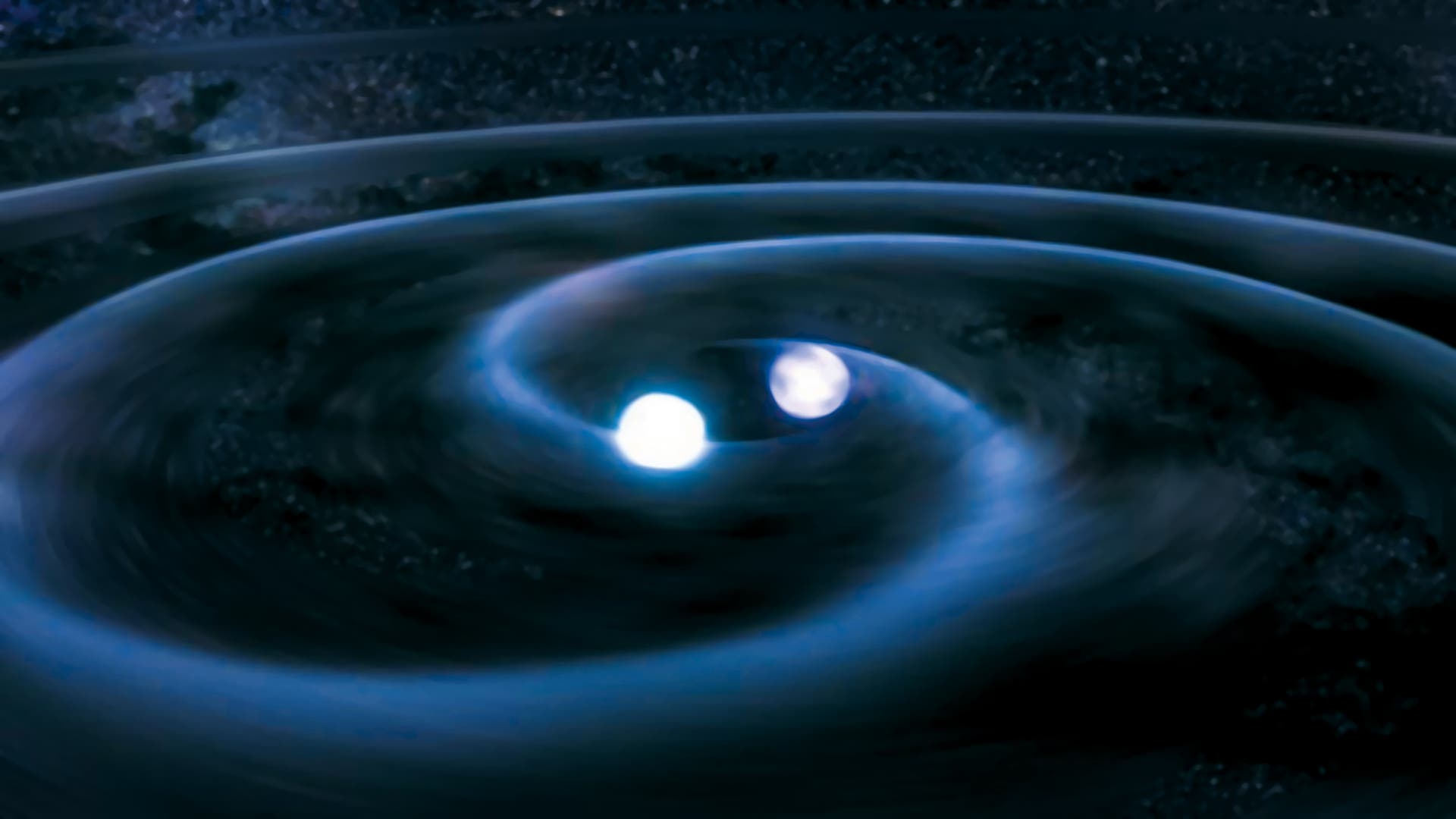
Finding exoplanets with gravitational waves: Planets leave tiny traces in the gravitational waves of binary systems consisting of two white dwarfs and could thus ...
spektrum.de/news/neue-entdeckungsmethode-mit-gravitationswellen-exoplaneten-finden/2354597


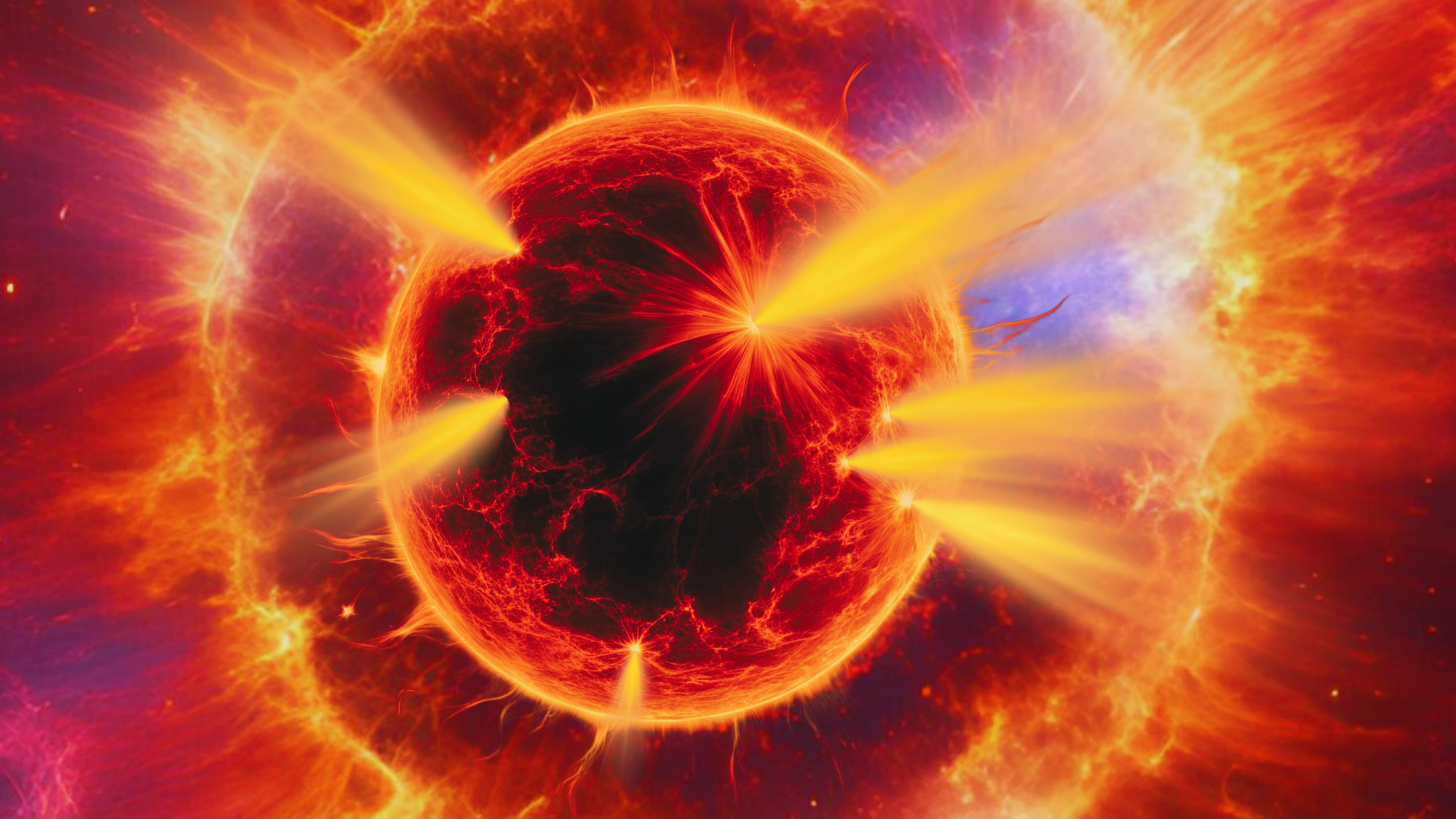

How ripples in space-time can reveal new exoplanets: The LISA (Laser Interferometer Space Antenna) observatory, now in development, will detect gravitational ...
phys.org/news/2026-11-ripples-space-reveal-exoplanets.html


New optical tech boosts gravitational-wave detection capabilities: In a paper published earlier this month in Physical Review Letters, a team of physicists led ...
phys.org/news/2025-02-optical-tech-boosts-gravitational-capabilities.html

Detecting the gravitational wave memory effect from core-collapse supernovae: Einstein's theory of gravity, general relativity, has passed all tests with ...
phys.org/news/2024-12-gravitational-memory-effect-core-collapse.html


New study simulates gravitational waves from failing warp drive: Imagine a spaceship driven not by engines, but by compressing the spacetime in front of it ...
phys.org/news/2024-07-simulates-gravitational-warp.html

New study uses self-interacting dark matter to solve the final parsec problem: In a new study, scientists from Canada have proposed a solution to the final ...
phys.org/news/2024-07-interacting-dark-parsec-problem.html


LIGO surpasses the quantum limit: In 2015, the Laser Interferometer Gravitational-Wave Observatory (LIGO), made history when it made the first direct detection ...
phys.org/news/2023-10-ligo-surpasses-quantum-limit.html
LIGO surpasses the quantum limit: In 2015, the Laser Interferometer Gravitational-Wave Observatory (LIGO), made history when it made the first direct detection ...
phys.org/news/2023-10-ligo-surpasses-quantum-limit.html

Gravitational waves may reveal nature of dark matter: Observations of gravitational waves from merging black holes may reveal new insights about dark matter ...
phys.org/news/2023-08-gravitational-reveal-nature-dark.html


First Evidence of Giant Gravitational Waves Thrills Astronomers: Scientific American is the essential guide to the most awe-inspiring advances in science and ...
scientificamerican.com/article/scientists-thrill-at-first-hints-of-cosmic-hum-from-giant-gravitational-waves1/
Key FactsScientists discover gravitational waves in the universe
Jun 29, 2023 · Reading time: ~30 sec.
Summary created with AI assistance
- Artistic interpretation of pulsars influenced by gravitational waves from a supermassive black hole in a distant galaxy.
- Gravitational wave signal observed in 15 years' worth of data from the Nanohertz Observatory for Gravitational Waves Physics Frontiers Center.
- Gravitational waves generated by astronomically dense objects in the universe, usually in orbit around each other.
- Researchers describe the universe's gravitational wave background as the equivalent of hearing the hum of a large group of people at a party without distinguishing any individual voice.

The search for the missing gravitational signal: Every year, hundreds of thousands of pairs of black holes merge in a cosmic dance that emits gravitational waves ...
phys.org/news/2023-03-gravitational.html
Next